
Reviews
Chromatic Dot Placement Puzzle succeeds by doing one thing well. The combination of limited moves and grid rotation creates a puzzle that feels fresh even after many levels. The minimalist visuals keep attention on the logic, and the gradual difficulty increase ensures players never feel overwhelmed. It is an excellent choice for anyone who enjoys spatial reasoning challenges without unnecessary complexity.
About This Game
Core Concept
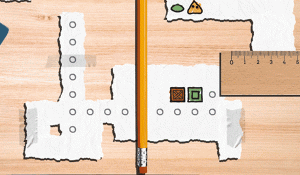
Chromatic Dot Placement Puzzle strips away unnecessary elements to focus on a single, satisfying challenge: moving colored tokens onto squares of the same color. The game presents a grid with several tokens and corresponding target squares. Players must navigate a movable square to collect each token and then rotate the entire system to align everything correctly. This straightforward premise hides surprising depth, as each level introduces new spatial constraints.
Movement and Rotation Phases
Gameplay unfolds in two distinct phases. First, players guide a square across the grid to reach a token, all while staying within a strict move limit. This phase rewards efficient pathfinding and forward thinking. Second, after collecting the token, players choose to rotate the grid left or right. This rotation shifts every token simultaneously, so its effect must be calculated in advance. A single misalignment forces a restart, making each decision carry weight.
Level Design and Difficulty Curve
Early levels introduce basic layouts with few tokens and ample moves, allowing players to grasp the core loop. As progress continues, grids become more crowded, move limits tighten, and token colors become harder to distinguish from similar hues. Some levels require multiple rotations, demanding that players track token positions across several steps. The difficulty ramps up gradually, ensuring that each new puzzle feels like a natural next step rather than a sudden leap.
Visual Style and User Interface
The game adopts a minimalist aesthetic with soft, muted colors and clean lines. Tokens appear as small circles, while target squares are outlined in matching shades. The interface shows the remaining moves clearly, and a restart button is always accessible. No animations or sound effects distract from the puzzle itself. This design choice helps players maintain focus on the logical challenge at hand.
Strategies for Improvement
Success often comes from studying the entire grid before making a first move. Identifying which tokens are closest to their targets can reveal an efficient route. When planning a rotation, mentally tracing each token's new position helps avoid surprises. If a level feels impossible, stepping away for a few minutes can provide a fresh perspective. Each failed attempt teaches something about the puzzle's structure, making subsequent tries more informed.



Comments
0 comments